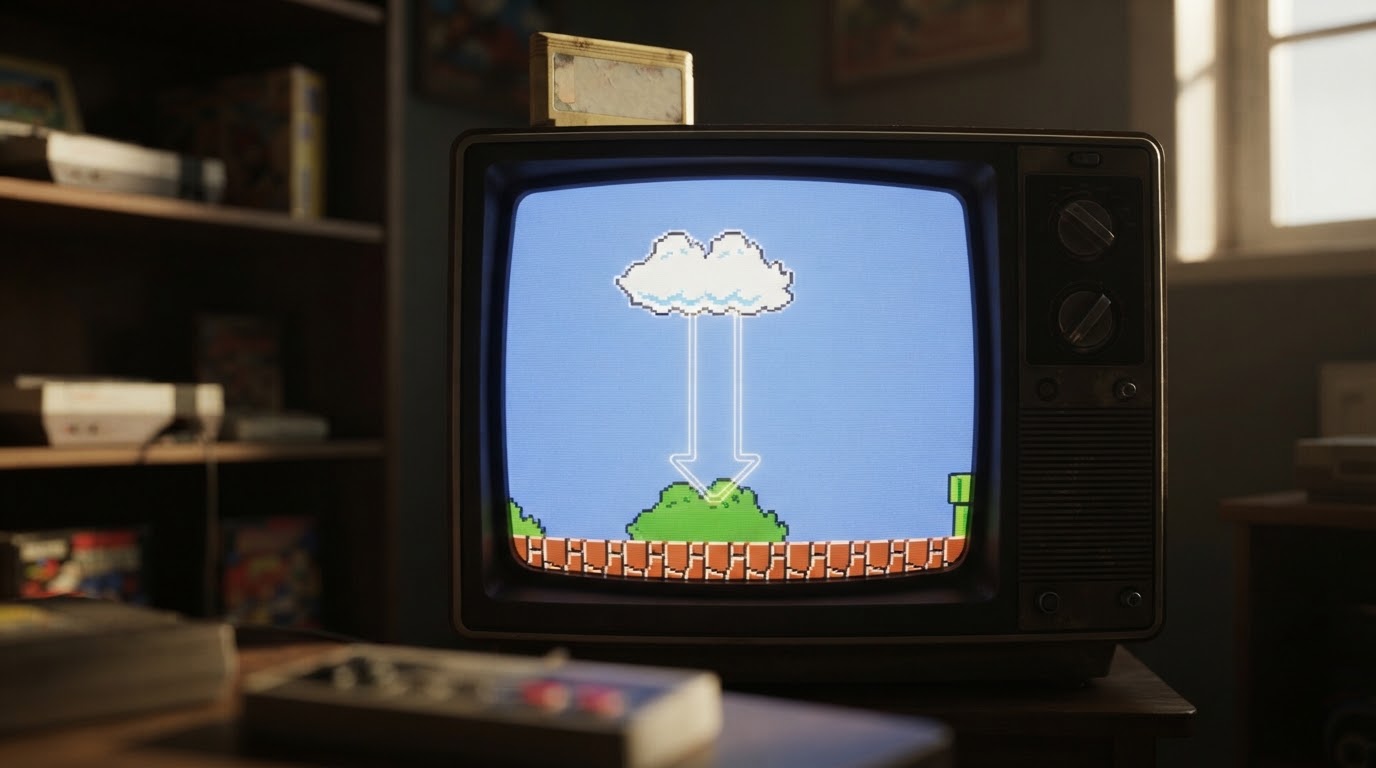
Released in 1985, the masterpiece Super Mario Bros. changed the history of video games worldwide. Did you know that the entire data capacity for this game—including all its programming, graphics, and music—was a mere “40KB (kilobytes)”?
This is incredibly small, less than 1/50th of a single photo taken with a modern smartphone (which is typically about 2 to 3MB). To depict a rich, expansive scrolling world within this extreme capacity limit, the developers of the time utilized magical data-saving techniques.
The Ultimate “Recycling” Technique Hidden in the Background
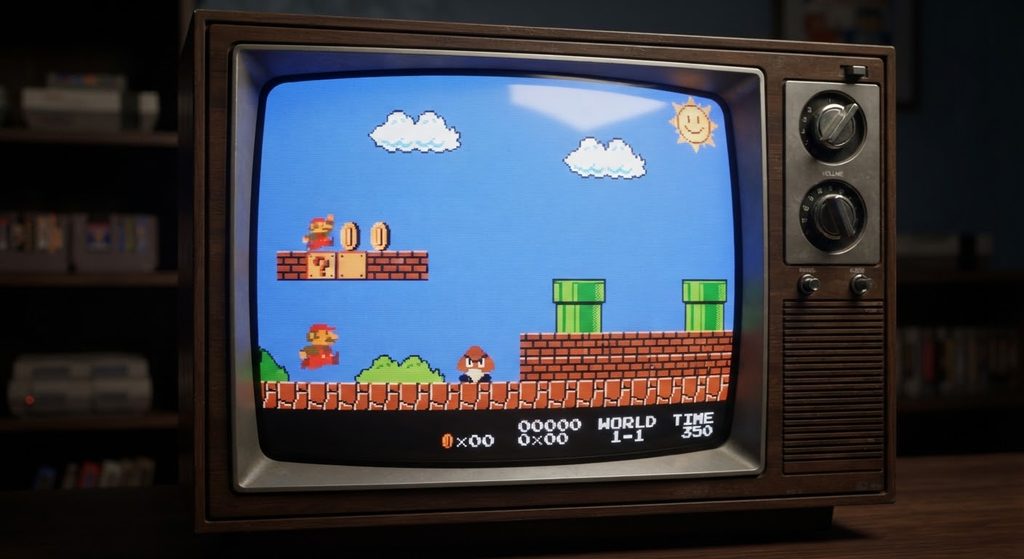
In early game development, graphic data was one of the biggest factors squeezing memory capacity. Therefore, the Nintendo development team, including Shigeru Miyamoto, devised a technique to reuse the same graphic data as a completely different object.
If you observe the game screen closely, you will notice that the white “clouds” floating in the sky and the green “grass” growing on the ground are exactly the same shape.
The development team prepared a single piece of graphic data (a sprite) and applied a “white” color palette when placing it in the sky, and a “green” palette when placing it on the ground. By exploiting the player’s unconscious perception that “fluffy things in the sky are clouds” and “spiky things on the ground are bushes,” they created a brilliant illusion, representing two entirely different background elements with half the data capacity.
“Mustache, Hat, and Overalls” Were Inevitable Design Choices
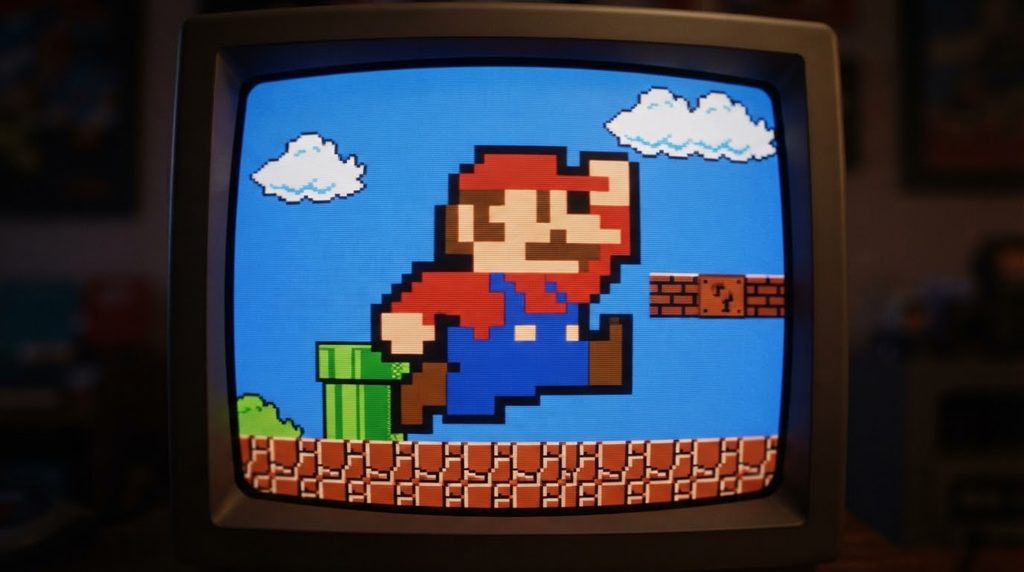
These data-saving innovations were deeply tied not only to the backgrounds but also to the character design of the protagonist, “Mario,” himself. The look of the world’s most famous plumber was not merely a matter of fashion preference; it was the crystallization of “functional beauty” designed to overcome the strict hardware limitations of the Famicom (NES).
- The Reason for the Hat: When a character jumps and falls, animating “hair blowing in the wind” with pixel art requires multiple frames of graphic data. Therefore, by “having him wear a hat,” they entirely omitted the need for hair animation.
- The Reason for the Mustache: Attempting to draw a face at the low resolution of the time (the face size was about 8×8 pixels) made it difficult to distinguish the expressions of the eyes and mouth. By giving him a large “nose” and a “mustache,” they saved the data and effort required to draw a mouth while clearly bringing out the contours of his face.
- The Reason for the Overalls: If the character’s arms and torso were the same color, they would blend together when running, making it impossible for the player to see the arm-swinging motion. By using contrasting colors—a shirt (red) and overalls (blue or brown)—they ensured that the movement was clearly visible even when the arms overlapped with the torso.
Limitations Birth Masterpieces of Design
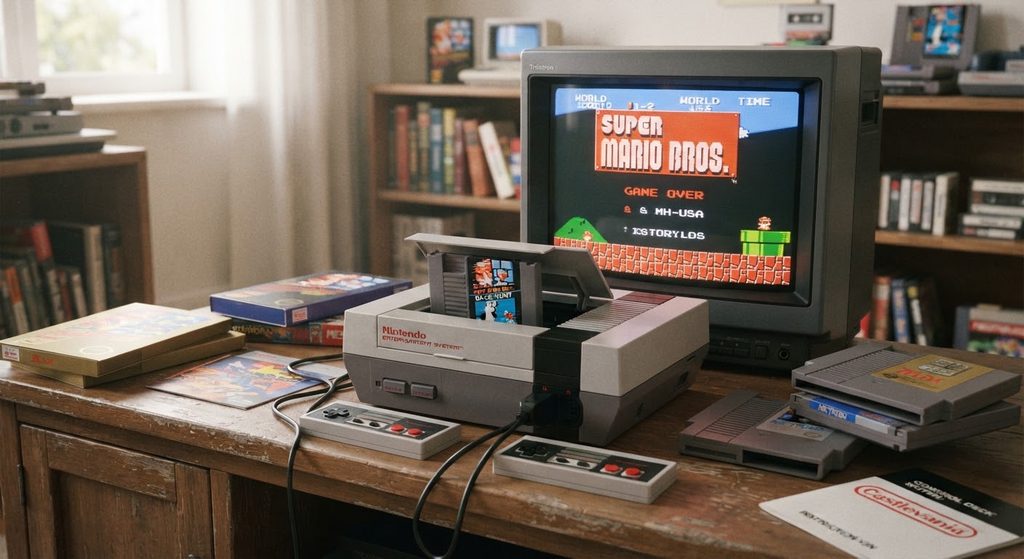
Rather than “compromising because of a lack of capacity,” the reverse thinking of “adding functional and memorable features because of a lack of capacity” ultimately gave birth to an iconic character and world that remains etched in everyone’s memory.
Even today, when modern 3D graphic engines can utilize tens of gigabytes of data endlessly, the “aesthetics of subtraction” and ingenuity of our predecessors, packed into a 40KB cartridge, continue to shine unfadingly as the origin of game design. The next time you have the chance to play the original Super Mario Bros., take a moment to appreciate the developers’ dedication woven into the background clouds, grass, and Mario’s attire.






コメントを残す