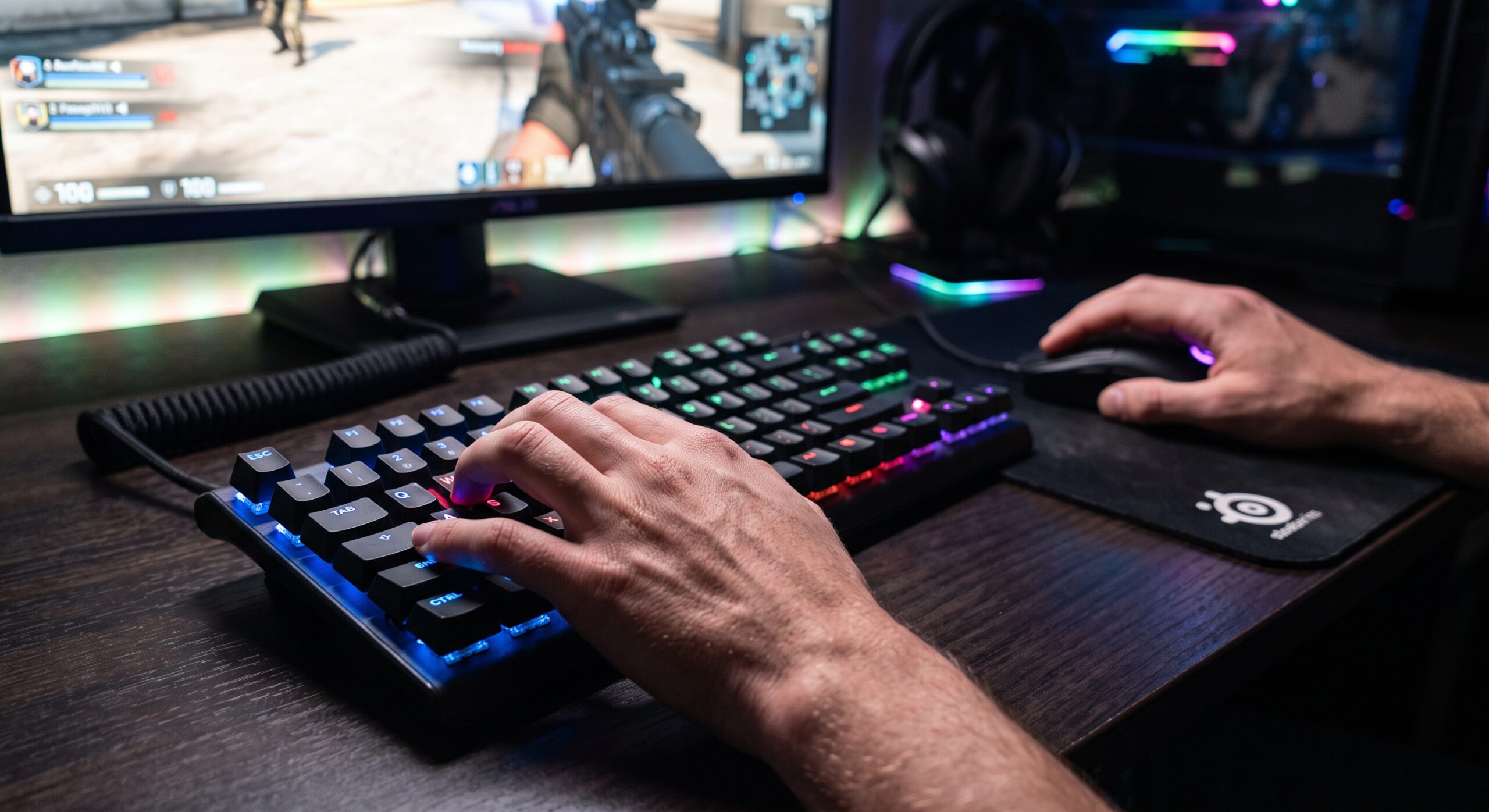
Today, resting your left hand on the “W-A-S-D” keys as your home position when playing PC games is as natural as breathing. From FPS and TPS to MMORPGs and open-world action games, “WASD = Movement” is the global standard across almost every genre.
However, this layout wasn’t established from the dawn of PC gaming. In the early days, movement in PC games was primarily handled by the “Arrow Keys” or the “Numpad.”
So, why did the arrow keys decline, and how did “WASD”—located on the left side of the keyboard—seize the throne? The answer lies in the evolution of 3D graphics, a certain genius professional gamer, and the innovative decisions of game developers. Today, let’s dive deep into the history of how WASD was born and became the standard, a shift that drastically changed the history of PC gaming.
The “DOOM” Era: When Arrow Keys Ruled
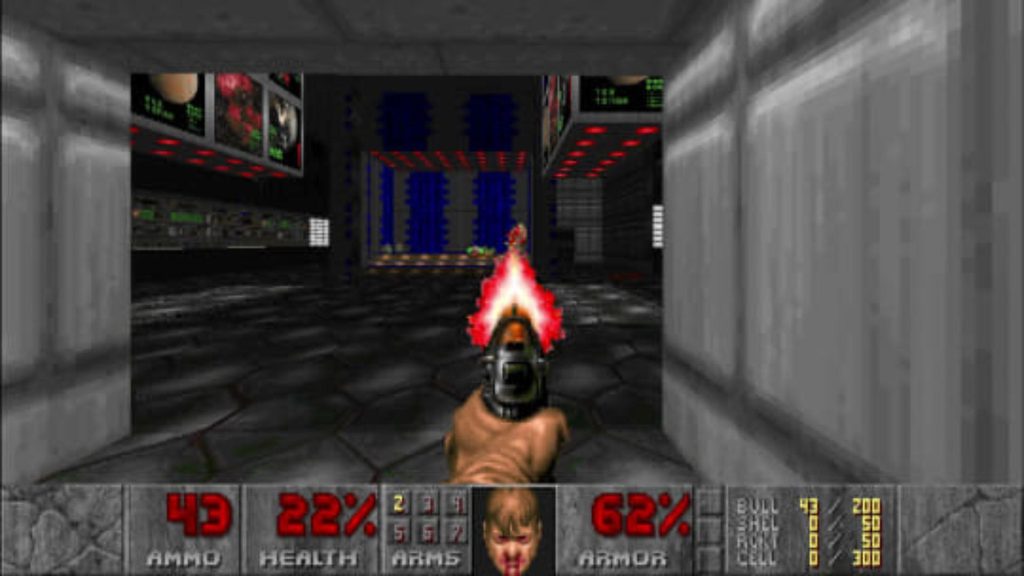
From the 1980s through the early 1990s, the arrow keys were the center of PC game controls. Even in DOOM, the massive hit of 1993 often called the grandfather of First-Person Shooters (FPS), the default movement controls were assigned to the arrow keys.
At the time, the concept of “mouselook”—using a mouse to freely look up, down, left, and right—had not yet taken root in PC gaming. Players were a majority who relied entirely on the keyboard, using the arrow keys to move forward, backward, and turn left or right, and holding “Alt + Left/Right Arrow” to strafe. The mouse was merely an auxiliary input device.
The Arrival of “Quake” and the Impact of Mouselook
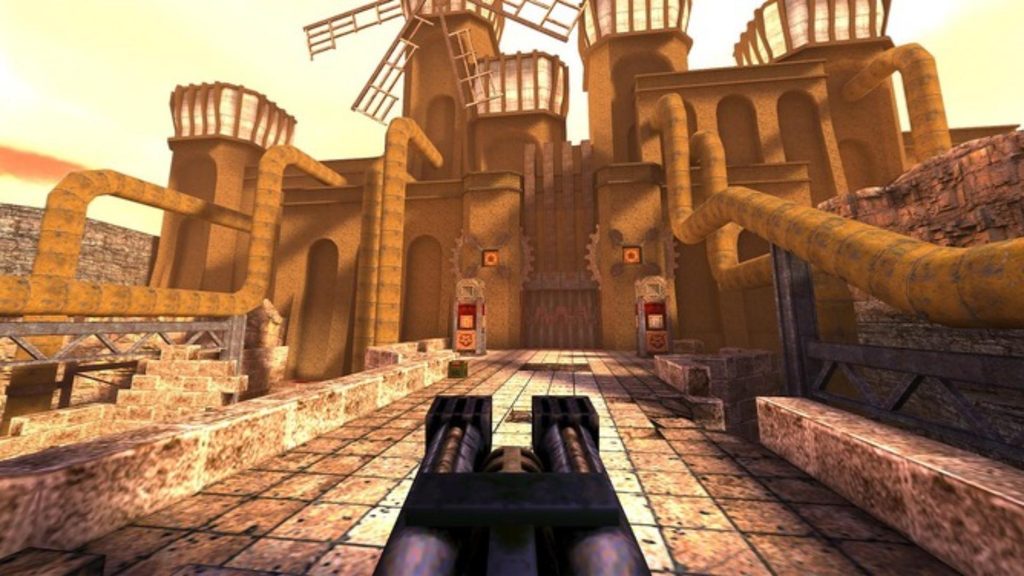
A revolution in control schemes came with the release of Quake by id Software in 1996.
Quake featured a world built entirely with full 3D polygons, where enemies could attack from any three-dimensional angle, including from above and below. To counter this, “mouselook”—the ability to intuitively and quickly aim vertically and horizontally—became absolutely essential.
This is where players pioneered the modern style of “controlling the mouse with the right hand and pressing keyboard keys with the left hand.” However, this led to a major hardware obstacle.
If you keep your right hand on the mouse and place your left hand on the arrow keys in the bottom right corner, what happens? Both hands are shifted to the right side of your body, creating a very cramped posture. Furthermore, your fingers are too far away from essential keys like Jump (Space), Crouch (Ctrl), Sprint (Shift), and the number keys for switching weapons (1-9).
To solve this problem, gamers of the era began searching for their own custom keybinds. The scene entered a “Keybind Sengoku (Warring States) Period,” with players placing their left hands on setups like “ESDF,” “ZXCV,” “ASXC,” or around the Numpad.
Dennis “Thresh” Fong: The Legendary Player Who Changed History

Among the multitude of key configurations, it was a single genius professional gamer named Dennis “Thresh” Fong who introduced “WASD” to the world.
He competed in the 1997 Quake national tournament, “Red Annihilation,” where he won with overwhelming dominance. He took home the grand prize—a Ferrari 328 GTS owned by lead developer John Carmack—and etched his name in history as the world’s first professional gamer.
The key configuration Thresh used was none other than “WASD.”
Why did he choose WASD? According to Thresh himself, the greatest advantage of WASD was its “accessibility to surrounding keys.”
- Spacebar (Jump): The thumb reaches it naturally.
- Shift / Ctrl (Sprint / Crouch): Easily pressed by just extending the pinky finger.
- Q, E, R, F (Action / Reload, etc.): Instantly accessible with the index and middle fingers.
- Number Keys (Weapon Swap): Easily reached (1-5) just by sliding fingers up from the home position.
While there were advocates for ESDF (the typing home position), WASD made it easier for the pinky to reach modifier keys like Shift and Ctrl on the edge of the board. Given the keyboard structures of the time and the average size of human hands, it boasted the “golden balance.”
The fact that the world’s strongest player used WASD quickly spread through early internet communities. Gamers everywhere downloaded his config file, “Thresh.cfg,” and applied it to their own games. Thus, as the “control scheme for winning,” WASD began to spread explosively at the grassroots level.
From Player Innovation to “Industry Standard”
Game developers did not overlook the fact that WASD was becoming common sense among players.
1997: A Step Forward with Quake II John Carmack of id Software, who was friends with Thresh, began including a WASD preset in the configuration settings of Quake II—though it wasn’t the default just yet.
1998: The Decisive Blow by Half-Life The biggest contributor to explicitly adopting WASD as the “default control” and elevating it to an industry standard was the historic masterpiece Half-Life, released by Valve in 1998. Starsiege: Tribes, released the same year, also adopted WASD as default. Because these massive hits set WASD from the start, “FPS movement = WASD” was cemented as common sense for the general audience who simply “installed and played.”
1999: The Complete Transition in Quake III Arena id Software, which had previously defaulted to the arrow keys, finally changed the default settings to WASD in their highly competitive title, Quake III Arena.
2004: The Mega-Hit of World of Warcraft The decisive moment was its spillover into non-FPS genres. Released by Blizzard Entertainment in 2004 and played by millions worldwide, the MMORPG World of Warcraft adopted WASD movement by default. This permeated WASD even among demographics who didn’t play shooters, securing its immovable status as the “absolute standard control” across all PC gaming.
Conclusion: WASD as an Evolutionary Inevitability
The “WASD” layout we casually use today was not designed or enforced by PC or keyboard manufacturers from the beginning.
It is the crystallization of PC gaming culture, born from the intersection of players’ pure quest to figure out “how to move comfortably in a 3D space with a mouse and keyboard,” the optimal solution created by the best player in the world, and the respect of game developers who took that passion and hardcoded it into their default settings.
Next time you boot up a game and rest your left hand on the keyboard, try to feel the nearly 30 years of history embedded in that “W” key. It might just make your everyday gameplay feel a little more profound.




コメントを残す